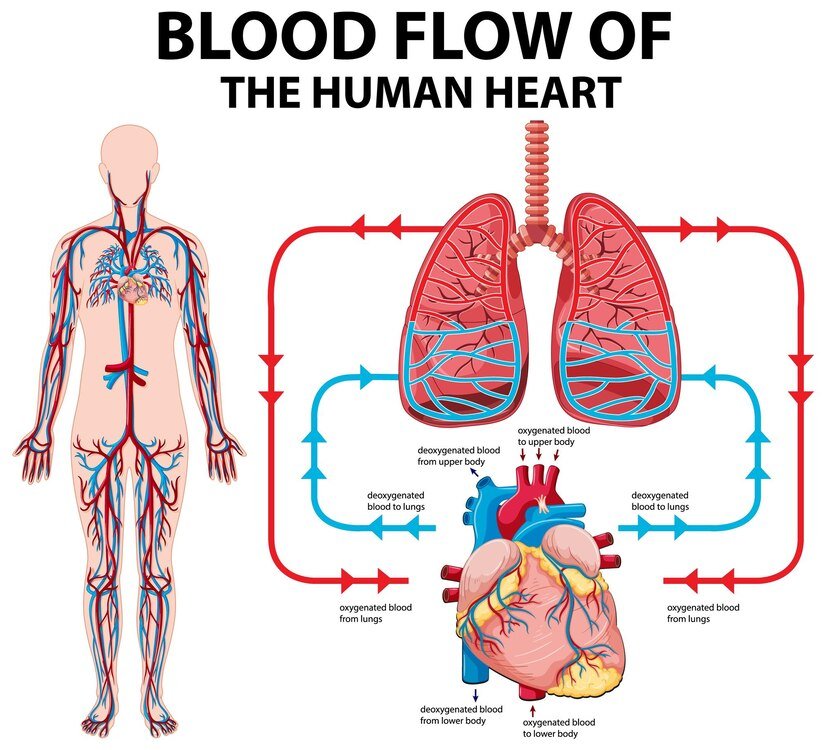
Biology can be one of the most frustrating HESI A2 sections to prepare for.
There are cells, genetics, metabolism, DNA, cellular respiration, biological processes, and terminology to remember. If you try to memorize everything at once, studying can quickly become overwhelming.
The better approach is to identify the concepts that matter, understand how they work, and then practice applying them.
That is what this guide is about.
These HESI A2 Biology tips are designed to help you organize your preparation, identify weak areas, retain information for longer, and become more comfortable with Biology questions before exam day.
If Biology is one of the sections required by your nursing program, don’t wait until the final few days to begin studying. Give yourself enough time to learn the concepts and practice applying them.
Tip 1: Find Out Whether Your Program Requires Biology
Before spending weeks preparing for Biology, check the admission requirements for your specific nursing program.
Not every school requires exactly the same HESI A2 subjects.
Some programs may require Biology, while others may place more emphasis on different sections.
Your school’s requirements should determine where you spend your study time.
Tip 2: Take a Biology Practice Test First
Don’t begin by reading hundreds of pages of notes.
Start by finding out what you already know.
Take a practice test and record:
- Questions you answered incorrectly
- Questions you guessed on
- Topics you didn’t understand
- Topics you answered confidently
This gives you a baseline.
At Olivia Grace Study Notes, we provide a free HESI A2 Biology Practice Test specifically for this purpose.
You can use it before studying and then take another practice test later to see whether your preparation is actually working.
Tip 3: Understand Cells Before Moving to Advanced Topics
The cell is the foundation of Biology.
Make sure you understand the basic functions of major cell structures, including:
- Nucleus
- Ribosomes
- Mitochondria
- Cell membrane
- Cytoplasm
- Golgi apparatus
- Endoplasmic reticulum
- Lysosomes
Don’t simply memorize names.
Know what each structure does.
For example, knowing that mitochondria are associated with cellular energy is more useful than simply memorizing the word “mitochondria.”
Tip 4: Understand the Difference Between Prokaryotic and Eukaryotic Cells
This is a fundamental Biology concept.
You should understand the major differences between these two cell types.
For example, eukaryotic cells contain a membrane-bound nucleus, while prokaryotic cells do not.
Don’t memorize isolated facts.
Understand what those differences mean and how the two cell types are organized.
Tip 5: Master the Cell Membrane
The cell membrane is another important concept.
Understand:
- Its basic structure
- Selective permeability
- Movement of substances
- Passive transport
- Active transport
You should be able to distinguish processes such as diffusion, osmosis, and active transport.
Tip 6: Learn Osmosis and Diffusion With Examples
These concepts become much easier when you visualize them.
Diffusion involves movement from an area of higher concentration toward an area of lower concentration.
Osmosis specifically involves the movement of water across a selectively permeable membrane.
Don’t just memorize definitions.
Practice questions involving these processes until you can recognize them immediately.
Tip 7: Understand ATP and Cellular Energy
You should understand why ATP is important to cells.
ATP serves as a major energy-transfer molecule in cellular processes.
This connects directly with cellular respiration, so learning these concepts together makes studying easier.
Tip 8: Study Cellular Respiration as a Process
Don’t memorize the names of cellular respiration stages without understanding the overall process.
Learn the relationship between:
- Glycolysis
- Krebs cycle
- Electron transport chain
- ATP production
Understanding the sequence makes individual facts much easier to remember.
Tip 9: Understand Photosynthesis
Even students preparing for nursing programs should not automatically skip photosynthesis.
Understand the basic purpose of:
- Light-dependent reactions
- Calvin cycle
- Chlorophyll
- Glucose production
You don’t necessarily need to memorize every biochemical detail.
Focus on understanding the overall process and the relationship between its major stages.
Tip 10: Learn DNA Structure
DNA questions become much easier once you understand the basic structure.
Know:
- Nucleotides
- Nitrogenous bases
- Double helix
- Base pairing
You should also understand the relationship between DNA, genes, and chromosomes.
Tip 11: Understand DNA Replication
Don’t simply memorize the phrase “DNA replication.”
Understand what happens when DNA is copied.
Know the basic idea of complementary base pairing and why replication is necessary before cell division.
Tip 12: Know the Difference Between Mitosis and Meiosis
This is an important comparison.
Understand the purpose of each process and the major differences between them.
Mitosis is associated with producing genetically similar daughter cells for growth and tissue maintenance.
Meiosis produces cells involved in sexual reproduction and results in genetic variation.
Make sure you understand the difference rather than simply memorizing two definitions.
Tip 13: Understand Basic Genetics
Genetics can look complicated at first.
Start with the basics:
- Genes
- Alleles
- Dominant traits
- Recessive traits
- Genotype
- Phenotype
Once these concepts make sense, more complicated genetics questions become easier to approach.
Tip 14: Practice Punnett Squares
If genetics is part of your preparation, practice Punnett squares.
Don’t just memorize the procedure.
Understand what the square represents and how it can be used to predict possible genetic combinations.
Work through several examples until the process becomes familiar.
Tip 15: Learn the Four Biological Macromolecules
Make sure you understand:
- Carbohydrates
- Lipids
- Proteins
- Nucleic acids
Know their basic functions and examples.
For example, proteins have numerous functions, including serving as enzymes and structural components.
The important thing is to understand relationships rather than memorizing disconnected lists.
Tip 16: Understand Enzymes
Enzymes are biological catalysts.
You should understand:
- What enzymes do
- Substrate
- Active site
- Enzyme specificity
- Factors that affect enzyme activity
Questions may present a scenario rather than simply asking for a definition.
Understanding the concept allows you to apply it.
Tip 17: Use Diagrams and Visuals
Biology is highly visual.
Use diagrams to study:
- Cell structures
- DNA
- Mitosis
- Meiosis
- Cellular respiration
- Biological processes
A simple diagram can sometimes communicate a concept more effectively than several pages of text.
This is also why visual study materials can be particularly useful when preparing for science-heavy sections.
Tip 18: Don’t Memorize Without Understanding
This is probably the most important Biology tip in this article.
Memorization has a place in Biology.
But memorizing hundreds of definitions without understanding how concepts connect makes it difficult to answer questions that are worded differently from your study materials.
Instead of asking:
“What definition do I need to remember?”
ask:
“How does this process work?”
That change in thinking can make a major difference.
Tip 19: Review Your Wrong Answers
Every practice question you miss should teach you something.
Create a mistake log.
For each incorrect question, record:
Topic: Osmosis
What I chose: Diffusion
Correct concept: Osmosis refers specifically to water movement across a selectively permeable membrane.
Why I got it wrong: I confused the general movement of substances with water movement.
This turns mistakes into personalized study material.
Tip 20: Combine Your Study Guide With Practice Tests
Reading a Biology study guide once isn’t enough.
You need to apply what you’ve learned.
A strong preparation cycle looks like this:
Learn → Practice → Review mistakes → Relearn → Test again
At Olivia Grace Study Notes, you can combine the HESI A2 Biology Study Guide with our free HESI A2 Biology Practice Test.
The practice test helps you identify weaknesses, while the study guide gives you structured material to review those areas.
If you’re preparing for several HESI A2 sections, you can also use our complete HESI A2 Study Bundle rather than trying to organize separate resources for every subject.
How to Study Biology When You Don’t Have Much Time
Sometimes your exam date is approaching quickly.
If you have limited time, don’t attempt to study every Biology topic equally.
Start with your weakest areas and prioritize foundational concepts such as:
- Cell structure and function
- Cell transport
- Cellular respiration
- DNA and genetics
- Mitosis and meiosis
- Enzymes
- Macromolecules
Then use practice questions to determine which areas still need attention.
The goal isn’t to become a Biology professor.
The goal is to become sufficiently comfortable with the concepts your exam may test.
A Simple 7-Day HESI A2 Biology Study Plan
If you have one week available, you can organize your preparation like this.
Day 1: Cells
Study:
- Cell structures
- Prokaryotic vs. eukaryotic cells
- Cell membrane
- Cellular transport
Finish with practice questions.
Day 2: Energy and Metabolism
Study:
- ATP
- Enzymes
- Cellular respiration
- Photosynthesis
Review your mistakes afterward.
Day 3: DNA
Study:
- DNA structure
- Replication
- Genes
- Chromosomes
Then complete practice questions.
Day 4: Cell Division
Focus on:
- Mitosis
- Meiosis
- Cell cycle
Pay particular attention to the differences between mitosis and meiosis.
Day 5: Genetics
Review:
- Genes
- Alleles
- Genotypes
- Phenotypes
- Dominant and recessive traits
- Punnett squares
Day 6: Review
Go back through your weakest topics.
Don’t spend most of the day rereading material you already understand.
Day 7: Practice Test
Take a full Biology practice test under timed conditions.
Compare your results with your original baseline.
Your goal is to identify improvement and remaining weaknesses.
How to Know Whether You’re Actually Improving
Don’t measure preparation by the number of hours you’ve studied.
Measure it by performance.
For example:
Your first practice test:
58%
After targeted study:
68%
Later practice:
76%
That progression tells you much more than saying, “I’ve studied Biology for 20 hours.”
Keep track of your results.
Common Biology Study Mistakes
Avoid these habits:
Trying to Memorize Everything
There is too much information to memorize indiscriminately.
Prioritize foundational concepts.
Studying Without Practicing
Reading isn’t enough.
Answer questions.
Ignoring Mistakes
A wrong answer tells you exactly where you need more work.
Jumping Between Topics
Complete one concept before moving to another.
Leaving Biology Until the Last Minute
Biology contains interconnected concepts.
Give yourself enough time to understand them.
Build Your HESI A2 Preparation Around Your Weaknesses
Your preparation shouldn’t look exactly like another student’s.
If you score 85% in Vocabulary but 60% in Biology, your study schedule should reflect that difference.
Use your practice-test results to decide where your time goes.
At Olivia Grace Study Notes, you can start with our free practice tests in Biology, Math, Anatomy, Vocabulary, and Grammar, then use the relevant study guides to strengthen the areas where you’re struggling.
For students who need preparation across multiple sections, the HESI A2 Study Bundle brings the major study guides together into one preparation resource.
Final Thoughts
Biology becomes much less intimidating when you stop trying to memorize an entire textbook.
Start with the foundations.
Understand how the concepts connect.
Practice questions regularly.
Review your mistakes.
Then test yourself again.
The most important HESI A2 Biology tip is simple: don’t confuse reading with learning.
You know a topic when you can explain it, recognize it in a question, and apply it without relying entirely on your notes.
Give yourself enough time to build that ability, and Biology becomes a much more manageable part of your HESI A2 preparation.





Leave a Reply